
Aggregation vs. Composition
Aggregation and composition both represents has-an-assiociation:
Aggregation
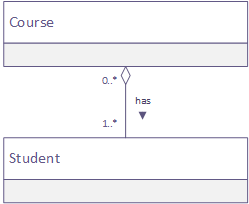
An object of class Course "owns" Students. But a Student is not owned exclusively by one course. He is possibly a part of other courses. Subsequently a the lifetime of owned objects is independent of lifetime of their owners. (If a course is closed, the student still exists in other ones.)
1 Student student = new Student();
2 Course course1 = new Course();
3 Course course2 = new Course();
4
5 course1.addStudent(student);    // only the reference of student is copied
6 course2.addStudent(student);    // and transferred by paraneter
Composition
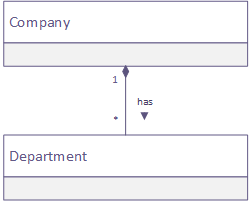
A Object of class Department is owned exclusively by the Object of class Company. A department is a part of company, which is not able to exists alone.
Therefore the lifetime of the object which represents a part, depends on the lifetime of the object which represents the owner. (A department object will be removed from memory at the same time the company object is removed.
1 Company company = new Company();
2 company.addDepartment(new Department());    // The department object is created during the parameter tranfer
3                                             // and therefore exists only within the company object
or without parameter e.g. in this way:
 1 import java.util.ArrayList;
 2 import java.util.Collection;
 3
 4 public class Company {
 5     // a list holds more than one department
 6     private Collection<Department> departments = new ArrayList<Department>();
 7
 8     public void createDepartment() {
 9         Department department = new Department(); // Even so, the object department does not exist
10         departments.add(department);              // outside of a company
11     }
12 }