
From biological to artificial neuron
Neurones are the nerve cells that make up the nervous system (together with glial cells). The human brain contains around 90 billion nerve cells.
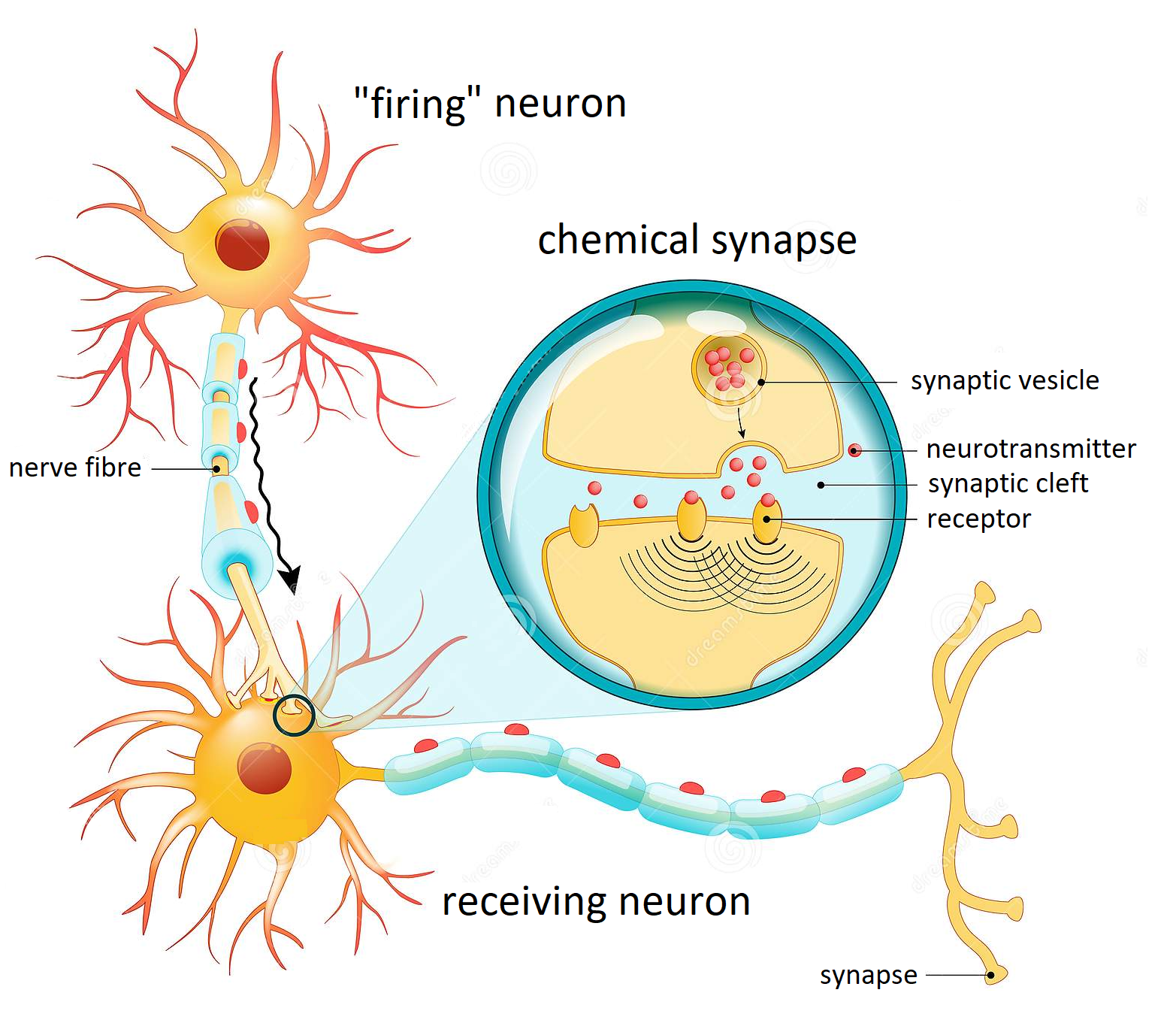
Natural neurons with synapse (Designua)
A neuron receives signals from several other brain cells. These " stimulations" are weighted differently and summed up - only when a certain threshold potential is exceeded - cause the neuron to "fire" according to the "all or nothing" principle. This means that the neuron itself now activates all the cells to which it is connected by its nerve fibres.
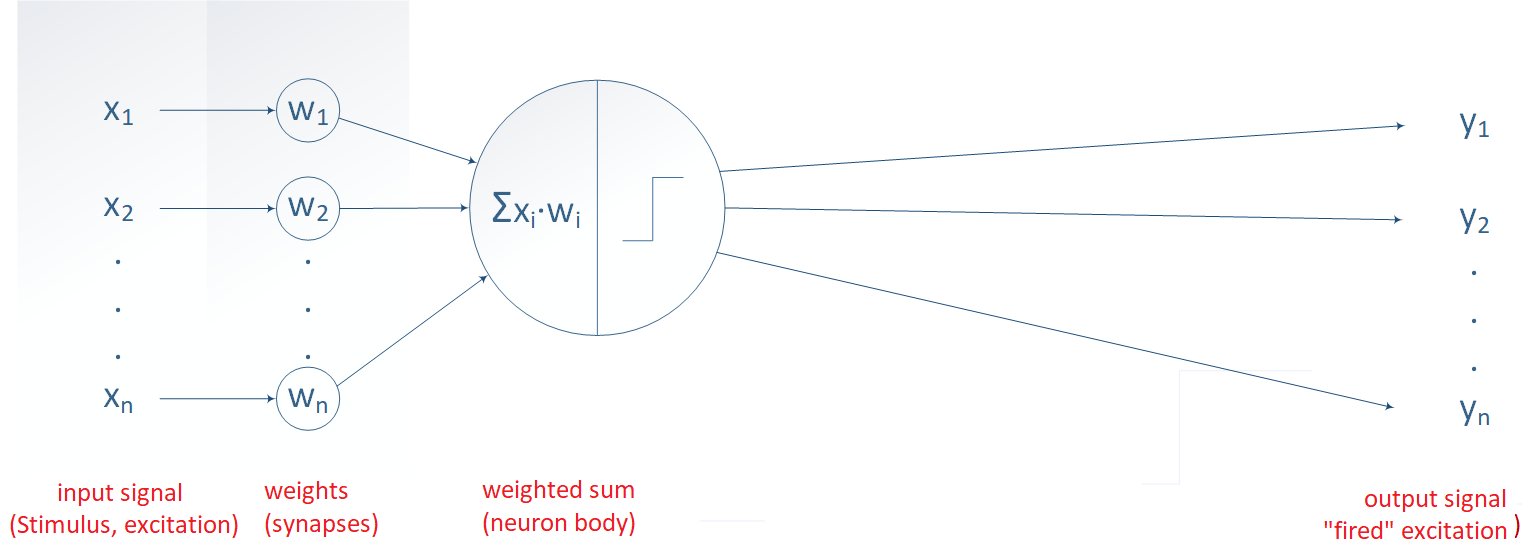
Artificial neuron
Whether the artificial neuron fires or not is essentially calculated individually, i.e. neuron by neuron. In contrast to the biological neuronal network, the summation of the incoming and weighted excitations in all neurons of the artificial neuronal network essentially does NOT take place simultaneously, i.e. in parallel.
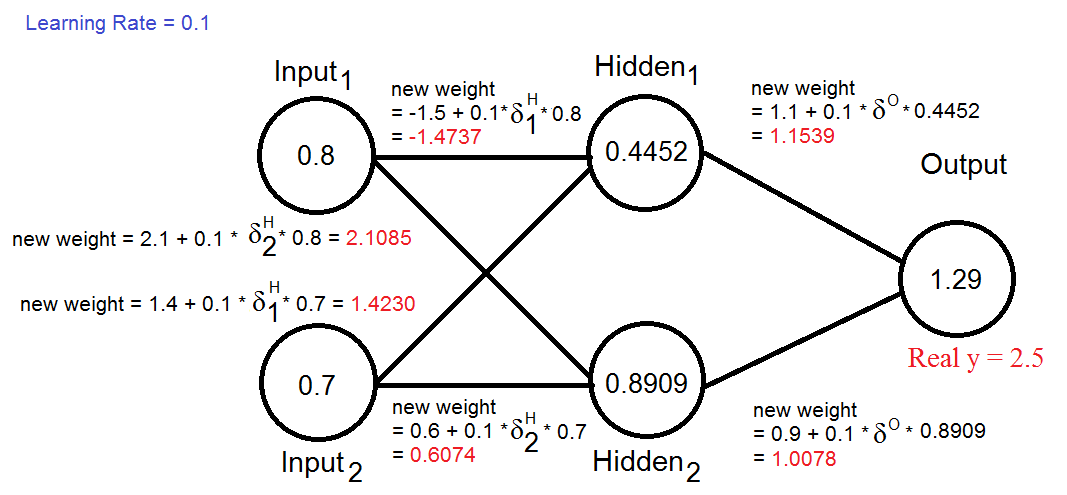
Weighting of the connections (Khan, 2017)
In the same way, this artificial neural network is trained step by step. This means that for the learning process, the weighting of the incoming signals must be recalculated neuron by neuron over time.
Real parallelisation using processors with many cores speeds up processing because calculations can be carried out more simultaneously.
Reference list:
Designua. Neuron communication [Illustration]. Dreamstime. https://nl.dreamstime.com/transmissie-van-het-zenuwsignaal-tussen-twee-neuronen-met-axon-en-synaps-close-up-een-chemische-neurale-mededeling-vectordiagram-image153760677 (Accessed and edited 20 Feb 2022)
Khan, Najeeb. (26 Oct 2017). Artificial Neural Network (ANN) [Graphic]. https://medium.com/@najeebnik21/activation-function-in-deep-learning-587e83d5a681 (Accessed 05 May 2024)