
Plagiarism Detection
Up to now, school grades have very often also relied on texts written by students (e.g. essays, papers, descriptions, theses, etc.).
The question being investigated here is whether teachers can determine whether their students have secretly used e.g. ChatGPT, i.e. have not cited correctly.
Very often, you can usually tell whether a student has created a text with the help of AI by looking at the writing style, namely when sections with rather awkward grammar alternate with those with remarkably sophisticated language.
Even if you are absolutely certain that a text is an AI product, it is often difficult to find proof of this.
Teachers can also use AI plagiarism checkers or AI content detectors to check if the content is AI-generated.
These tools provide a result by analyzing the content's writing style, repetitive phrases and ideas, grammar and syntax usage with trained data.
AI plagiarism checkers designed to recognise AI-generated content are for instance Plagiarism Checker, GPTZero, Copyleaks and Grammarly:
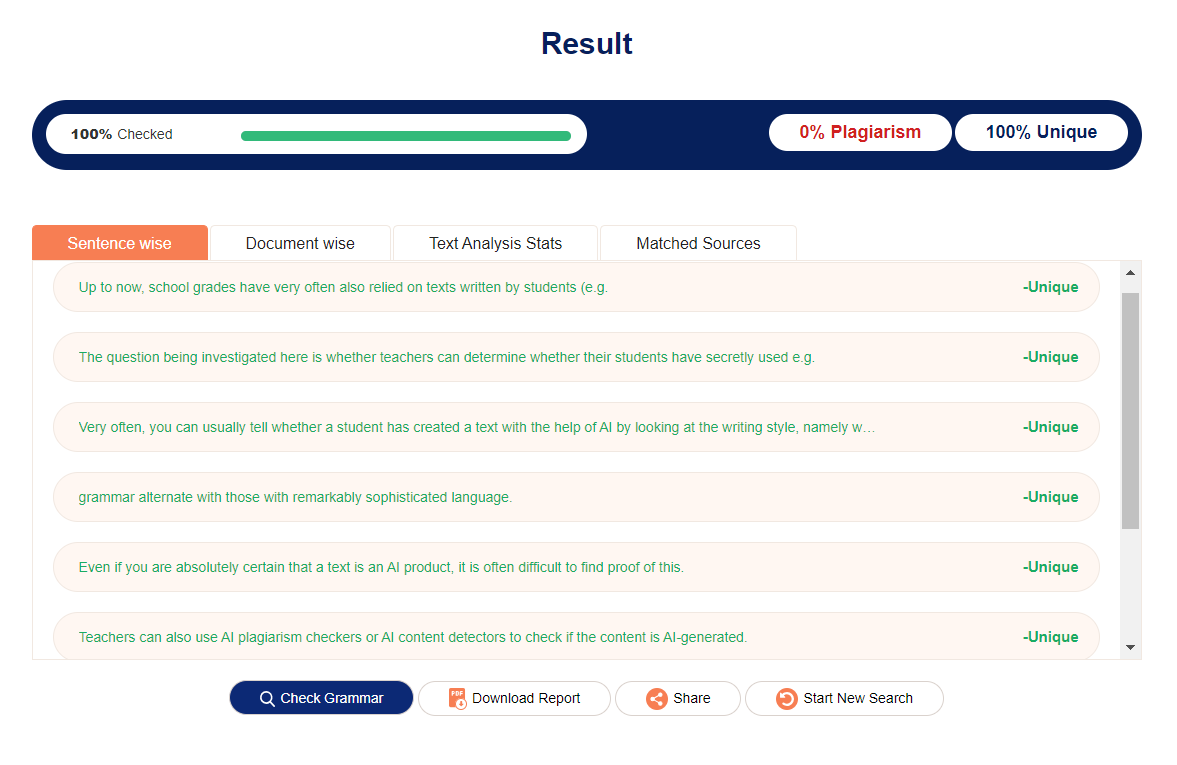
Plagiarism Check by https://www.plagiarismchecker.co/
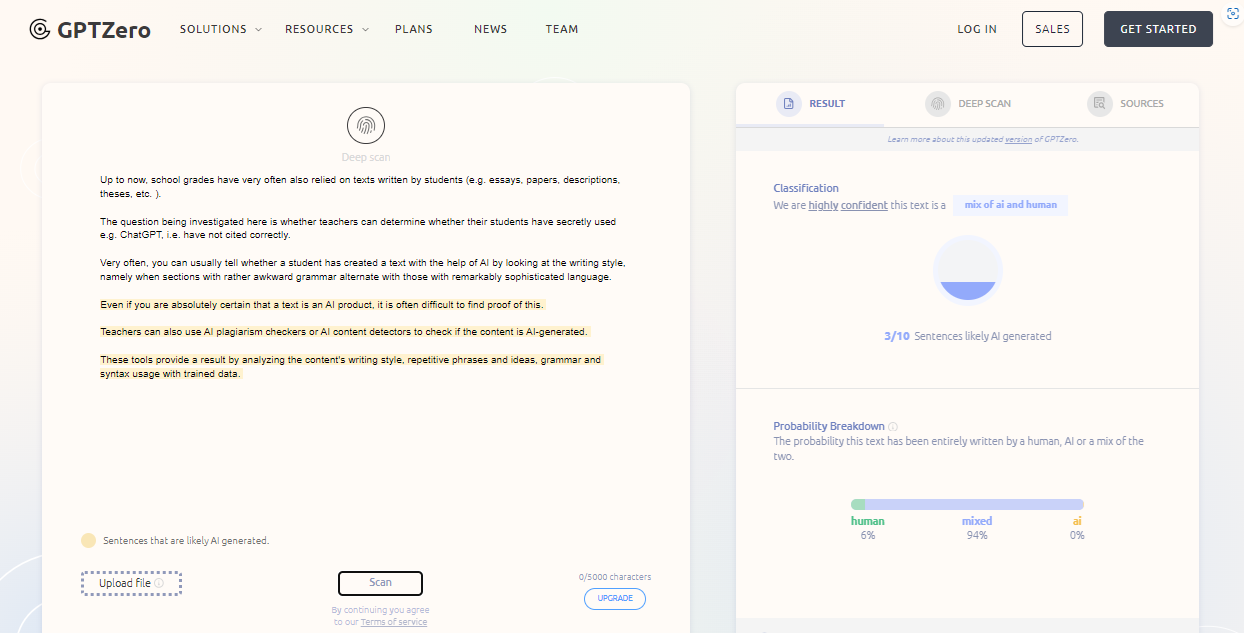
Plagiatism detection by https://gptzero.me/
It is interesting to note that GPTZero categorises the translation assistance provided by the AI-based deepl.com as plagiarism.
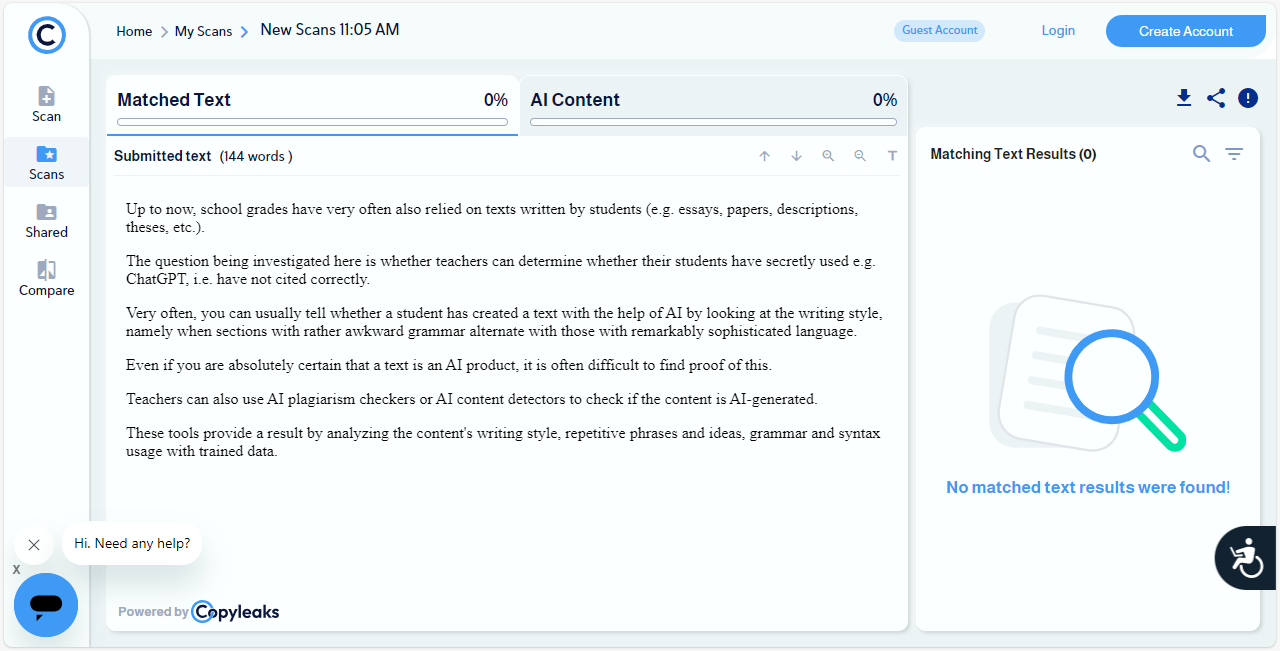
Plagiatism detection by https://copyleaks.com/plagiarism-detector
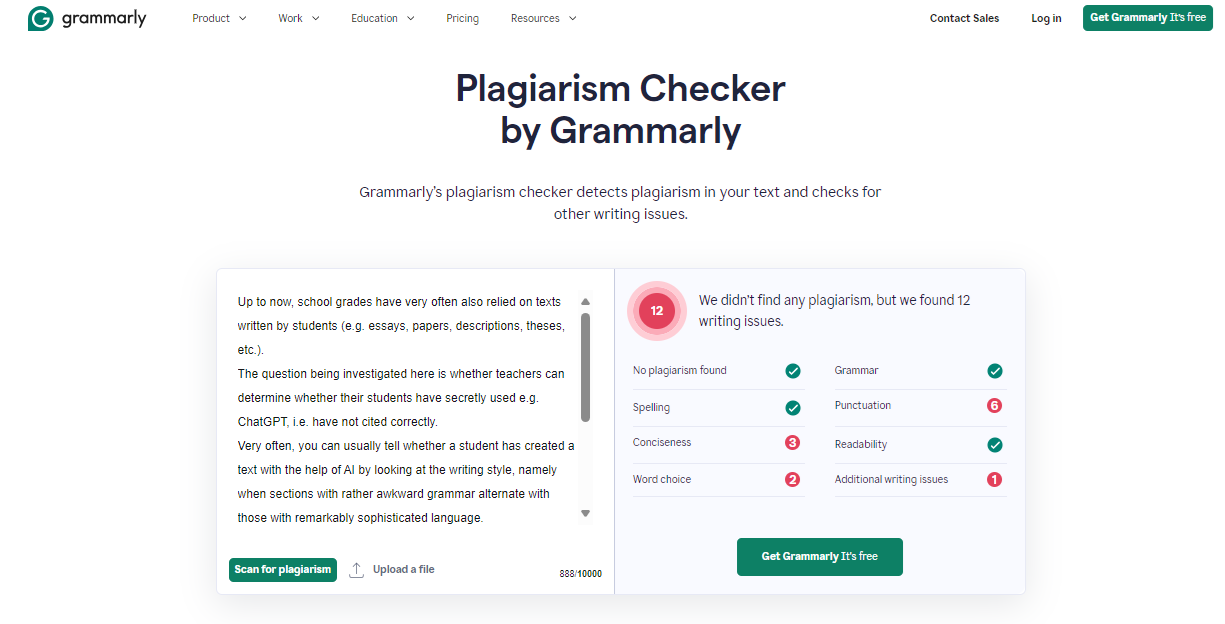
Plagiatism detection by https://www.grammarly.com/plagiarism-checker
The limitations of these and other tools were analysed in a study: "They too often present false positives and false negatives. Moreover, it is too easy to game the systems by using paraphrasing tools or machine translation. [...]
Our findings strongly suggest that the “easy solution” for detection of AI-generated text does not (and maybe even could not) exist. Therefore, rather than focusing on detection strategies, educators continue to need to focus on preventive measures and continue to rethink academic assessment strategies [...]. Written assessment should focus on the process of development of student skills rather than the final product." (Weber-Wulff et al. 2023)
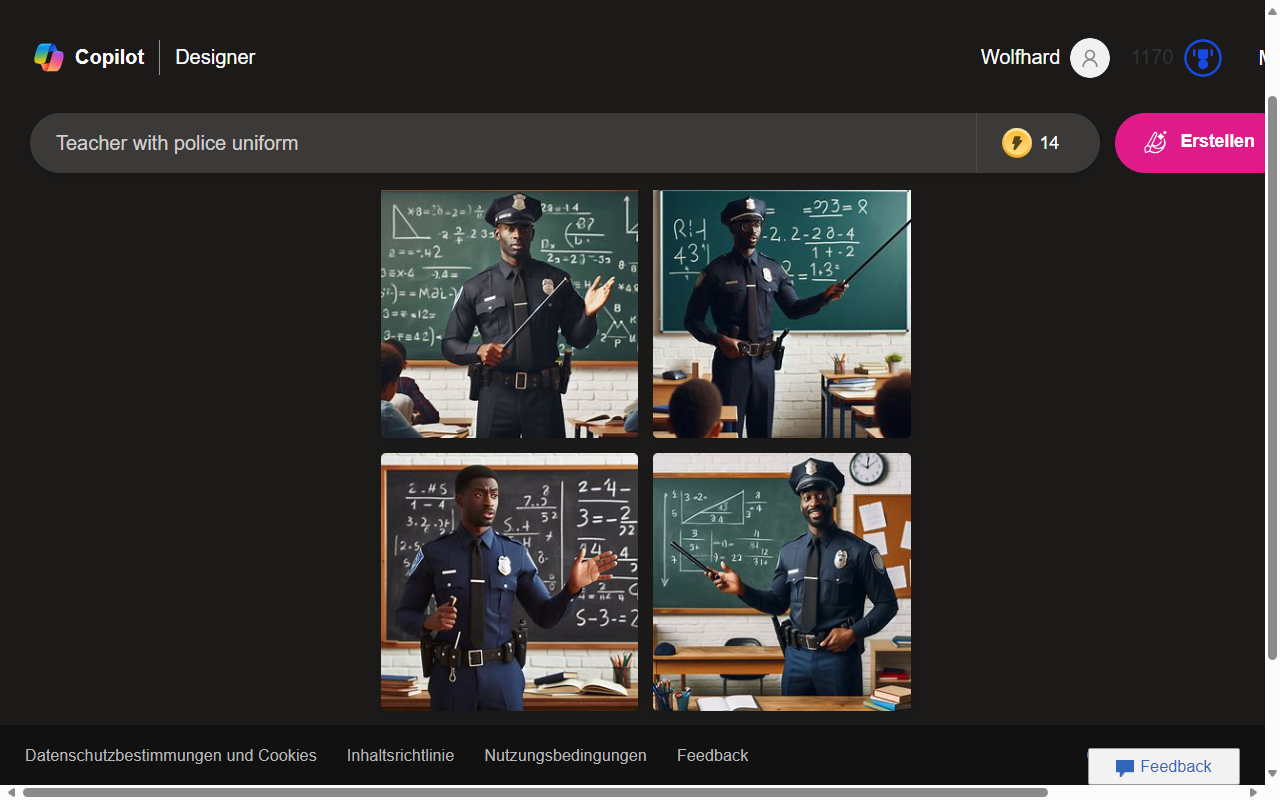
Illustration with the help of Dall-E 3: Teacher in police uniform (2024, Apr 22)
(Interesting: Presumably to prevent the accusation of Dall-E 3 training with a racist bias, the opposite is provided here, namely exclusively teachers in police uniform with black skin colour).
The risk of plagiarism in the classroom may be more likely to be Performance assessment in the age of ChatGPT reduced if students understand the implications of this. Identification with appropriate positive behaviour could help by working with your students to develop a code of conduct, particularly in relation to plagiarism, including sanctions.
Reference list:
Weber-Wulff, D., Anohina-Naumeca, A., Bjelobaba, S., Foltýnek, T., Guerrero-Dib, J., Popoola, O., Šigut, P. & Waddington, L. (2023, Dec 25). Testing of detection tools for AI-generated text. International Journal for Educational Integrity. https://edintegrity.biomedcentral.com/articles/10.1007/s40979-023-00146-z (Accessed 06 May 2024)